
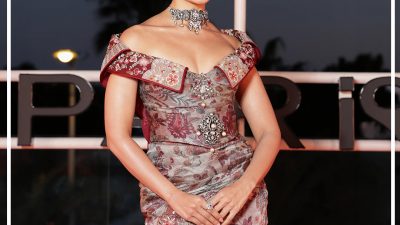
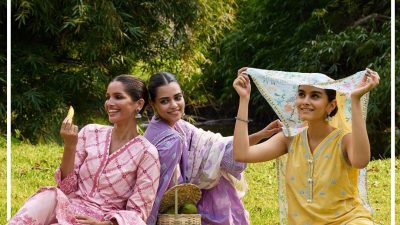
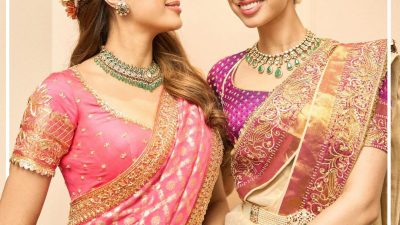
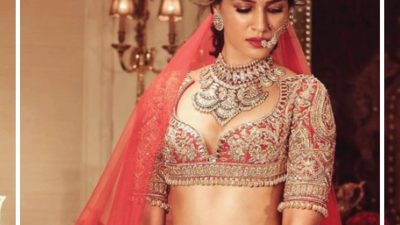
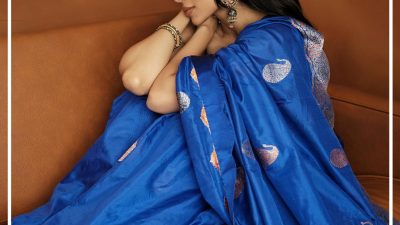
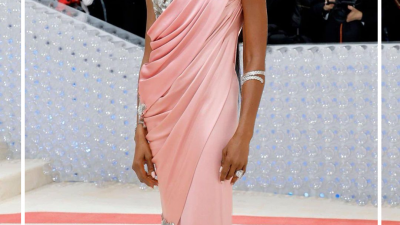
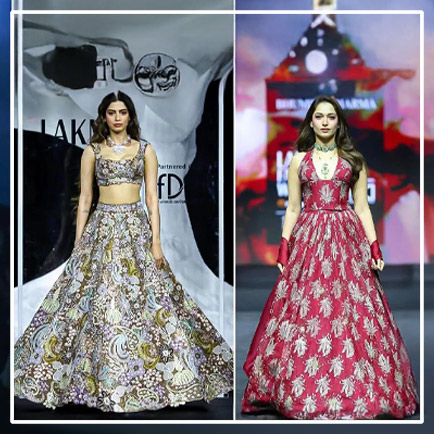

Lakmé Fashion Week 2026 x FDCI returned to Mumbai with collections that felt considered, wearable and visually striking. Hosted at the Jio World Convention Centre, the season brought forward designers who focused on precise tailoring, fluid drapes and surface detail that stood out without excess. From sculpted metallic forms to printed lehengas and relaxed festive sets, the runway reflected a shift towards clothes designed for real occasions rather than just spectacle.
There was a noticeable emphasis on ease, lighter constructions, softer layering and silhouettes that allow movement while still holding structure. Embellishment felt controlled, used to highlight form instead of overpower it. The result was a lineup of pieces that translate seamlessly from runway to wardrobe. At Aashni + Co, these collections come together in a curated edit, making the season’s most relevant designs accessible beyond the show.
Anamika Khanna: Redefining Power Dressing
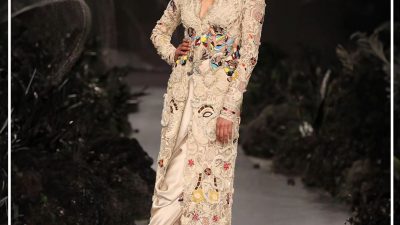
Anamika Khanna’s AK|OK line continues to reshape how Indian fashion approaches structure and ease. Building on ideas seen in her Silver Collar showcase, the collection reworked power dressing into something more relaxed and wearable. Tailored pieces were paired with fluid layers, creating looks that feel sharp yet effortless.
Instead of heavy, separate embellishments, the detailing was built into the garments themselves. Sequins, metallic threads, subtle beadwork and textured panels were woven or embroidered directly into jackets, capes and tops, so the surface felt rich without looking heavy. The palette stayed largely monochrome with hints of metallics, allowing the focus to remain on cut and finish. Silhouettes included draped jackets, wide leg trousers, layered tunics and cape styles that move easily while still holding shape.
This season also introduced menswear, extending the same relaxed tailoring into jackets, shirts and layered separates designed with a similar sense of ease. At Aashni + Co, you can find a curated selection of her signature styles, including statement outer layers, coordinated sets and versatile pieces that can be styled for both occasion wear and everyday dressing.


Amit Aggarwal: Engineered Expression
Amit Aggarwal’s showcase stayed rooted in his focus on material innovation, with a strong emphasis on how fabric can be shaped and structured. The collection featured his signature use of polymer-treated textiles, recycled materials and handwoven fabrics that were manipulated to hold sculptural forms. Techniques such as pleating, folding, bonding and layering were used to create volume and definition without adding bulk.
The surface of the garments stood out through metallic finishes, especially in tones of copper, bronze, gunmetal and deep gold. These were balanced with darker base shades like black, charcoal and deep jewel tones, allowing the structure of the garment to remain the focal point. Instead of traditional embroidery, texture came from the way the fabric itself was treated, whether through ribbed surfaces, linear pleats or structured panels.
Silhouettes included sharply contoured gowns, pre-draped saris, structured skirts and sculpted blouses that hold their shape while still allowing movement. The garments were designed to frame the body, creating clean lines and defined forms rather than soft draping.
At Aashni + Co, you can find a curated selection of his designs, including sculpted saris, statement gowns and lehengas that bring this distinctive approach to celebration wear into a wearable, modern wardrobe.

Aisha Rao: Print as Identity
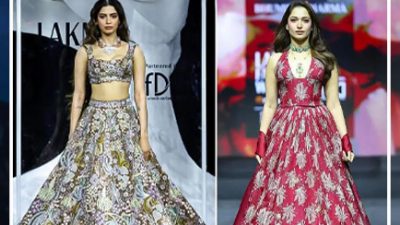
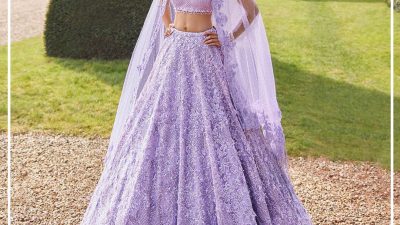
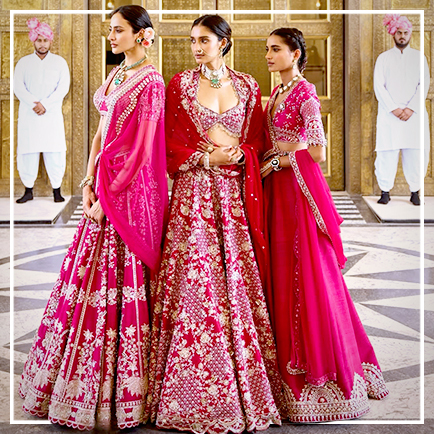
Aisha Rao approached the runway with a strong focus on print and colour, using surface design to define each look. Her collection featured her signature use of hand-drawn and digitally developed prints, including abstract florals, blurred botanicals and layered motifs that resemble brushstrokes and painted textures. The colours moved across rich tones such as deep reds, burnt orange, fuchsia, indigo and soft pastels, often blended within a single garment to create depth and movement.
Fluid lehengas paired with structured blouses formed the base of the collection, along with printed dupattas that allowed the prints to stand out. The garments were designed to let the surface do the work, with minimal additional embellishment so the patterns remain the focus.
The overall approach feels expressive and individual, with each piece carrying a distinct visual identity. At Aashni + Co, you can find a curated selection of her printed lehengas that bring this bold yet wearable aesthetic into a modern wardrobe.

Bhumika Sharma: Soft Structure, Festive Ease
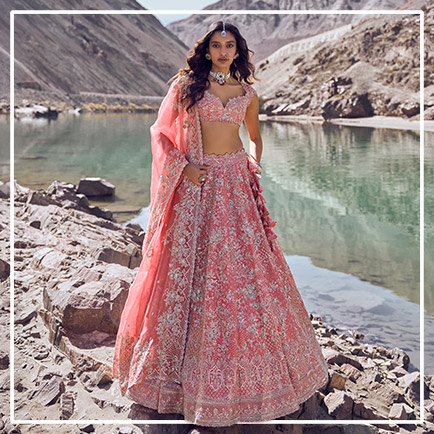
Bhumika Sharma’s Afterglow collection explored silhouettes through a softer, more relaxed lens, focusing on pieces that feel light yet visually rich. The collection featured corset-style blouses paired with lehengas and skirts that were cut to flow rather than hold stiff volume. Fabrics such as silk blends, organza and lightweight brocades were used to create movement, while still maintaining a polished finish.
Surface detailing included fine thread embroidery, sequins, mirror accents and delicate gota work, applied in a controlled way so the garments shimmer subtly rather than appear heavily embellished. The colour palette moved through warm tones such as champagne, rose gold, soft gold, muted peach and ivory, alongside deeper shades for contrast.
At Aashni + Co, you can find a curated selection of her lehengas, corset blouses and more that bring together ease, detail and a refined festive sensibility.

Ritika Mirchandani: Defined Glamour
Ritika Mirchandani’s collection focused on sharp construction and a controlled approach to embellishment, creating evening wear that feels strong without being overworked. The showcase featured sleek gowns and draped dresses, all designed with clean lines that define the body while allowing ease of movement.
Fabrics such as satin, crepe and stretch blends were used to achieve a smooth, close fit, while sheer panels and subtle cut-outs added dimension without overwhelming the design. Instead of heavy embroidery, detailing came through carefully placed sequins, tonal beadwork and linear embellishment that followed the shape of the garment, highlighting the cut rather than covering it.
The colour palette stayed focused on classic evening tones including black, wine, deep emerald, metallic silver and muted gold, reinforcing the refined and understated mood of the collection. Silhouettes ranged from fitted gowns with elongated lines to draped styles that offer versatility for different occasions.
At Aashni + Co, you can find a curated selection of her gowns, cocktail pieces and evening wear that bring together structure, simplicity and a confident, modern sense of glamour.

Lakmé Fashion Week 2026 ultimately reflected a shift in how Indian fashion is being defined today, less about excess and more about intention. Designers are refining their language, focusing on pieces that hold meaning, versatility and longevity. With Aashni + Co curating these voices, the season’s most relevant collections are no longer confined to the runway. They become part of a more considered and enduring wardrobe.

Comments